Archives For Tag 'LTE'Archives For Tag 'LTE' Home » Blog » Tag » LTE
You are browsing lesterchan.net blog archives page by tag 'LTE'.
Wednesday, 11th January 2012Wednesday, 11th January 2012
Posted by Lester Chan at 15:10 in Gadget

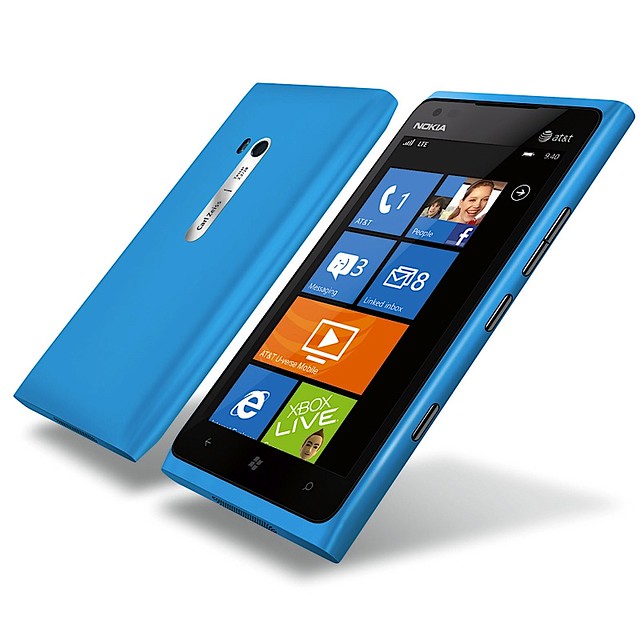
Nokia Lumia 900 was announced at CES 2012 but unfortunately at this point of time, it is only available exclusively for AT&T at launch time. I am pretty sure it will be in other countries as well. For Singapore, maybe SingTel will bring them in with their LTE service?

Now, if only Nokia included in NFC to the Lumia 900 and it would be perfect!

Nokia Lumia 900
Nokia Lumia 900

What Has Changed?
The design is almost the same as the Nokia Lumia 800 except it has bigger screen 4.3″ vs 3.7″ while maintaining the same resolution of 800×480.

The processer speed is the same at 1.4GHz, but the Nokia Lumia 900 uses a newer Snapdragon S2 processor, which I think should give it some performance boost over the Nokia Lumia 800.

When it comes to camera, the back camera remains the same while a 1MP front-facing camera has been added.

Gyroscope has been added to the Nokia Lumia 900 which was missing in the Nokia Lumia 800.

According to My Nokia Blog, the SIM tray design has been changed as well, now it requires a SIM Door Key (as what Nokia calls it, similar to iPhone’s SIM Tray Eject Pin) to open the SIM tray. Because of this change, the microUSB port is now exposed.

The battery capacity has also been increased from 1,450mAh of the Nokia Lumia 800 to 1,830mAh of the Nokia Lumia 900.

In the same post, Nokia Lumia 900 vs Nokia Lumia 800 – what’s changed by My Nokia Blog, it states that the Nokia Lumia 800 has a cured screen with no bezel while the Nokia 900 has a flat screen with raised edge bezel.

The Nokia Lumia 900 will only be available in 2 colors (Black or Cyan) instead of 3 like the Nokia Lumia 800.

Technical Specifications

  • Operating: Windows Phone Release 7.5 – Mango Commercial Release 2 (Mango + LTE)
  • Processor: 1.4GHz Snapdragon APQ8055 + MDM9200
  • Networks: GSM/EGSM 850/900/1800/1900, WCDMA 850/1900/2100, LTE Band 4 (1700/2100) & 17 (700)
  • 4G/LTE – up to 50Mbps down/25Mbps up, HSPA – up to 21Mbps down/5.76 Mbps up
  • 4.3″ ClearBlack AMOLED display with WVGA 800×480 resolution
  • 512MB RAM
  • 16 GB internal memory (14.5GB user memory)
  • Primary (Rear-facing): 8MP with f2.2/28mm Carl Zeiss lens and dual LED flash, Auto Focus, 720p, 30fps video capture
  • Secondary (Front-facing): 1MP with f2.4, 30fps video capture (VGA video call resolution)
  • A-GPS, Wi-Fi (802.11 b/g/n), USB 2.0 high-speed, Bluetooth 2.1 + EDR, 3.5mm headset connector
  • 1830mAh battery
  • Accelerometer, Proximity, Magnetometer, light sensor, Gyroscope
  • Volume: 90cc
  • Weight: 160 g (5.6 ounces)
  • Dimensions (max): 127.8 x 68.5 x 11.5 mm (5 x 2.7 x .45 inches)

Nokia Conversations: Nokia Lumia 900 – Born for the USA
Engadget: AT&T Nokia Lumia 900 Hands-on at CES 2012 (video)
My Nokia Blog: Nokia Lumia 900 vs Nokia Lumia 800 – what’s changed

Wednesday, 21st December 2011Wednesday, 21st December 2011
Posted by Lester Chan at 15:13 in Blog

On the 20th December 2011, SingTel launches the first LTE service in Singapore and it is available to both consumer and business users. The new LTE service will initially be available for USB dongle modems only. It will be enhanced to support LTE-enabled smartphones and tablets when they become more readily available in the market.

The new LTE Broadband on Mobile (BBOM) plan is called Mobile Prestige 75.

Broadband on Mobile Prestige 75 Price Plan

  • Price (including GST): SGD$69.90/month
  • Data Bundle: 50GB 3G data (21Mbps) + 10GB LTE data
  • Excess Charges: SGD$0.512/MB, Capped at SGD$94.16/month
  • Download Speed: 75Mbps (Theoretical), 3.4Mbps to 12Mbps (Typical)
  • Comes with free LTE dongle and free Wireless@SG (3Mbps)

Notes

  • Users can expect 3.4Mbps to 12Mbps speeds more than 80% of the time in areas of coverage. Speeds and user experience are dependent on factors such as the user’s location from base stations, the number of users in the area, the mobile devices used, as well as the response of websites accessed. Users may also experience slower speeds indoors where mobile signals are blocked by walls and structures.
  • Three times faster than dongle-based 21Mbps 3G mobile broadband service. Network latency will vary depending on the location of the web servers accessed by the user. 80% lower latency was measured for Singapore-based servers.
Tuesday, 16th March 2010Tuesday, 16th March 2010
Posted by Lester Chan at 17:30 in Press Release, Technology

Could not make it for this event as it is held during office hours, but nevertheless, I want to see how LTE can take mobile network to the next level. With the increasing number of smartphone users in the market, the demand for faster bandwidth and speed for mobile data transfer have also increased. I hope they do eventually trial the LTE in the MRT as I can’t even get a proper 3G signal in the MRT (blue and red line).
Press Release:

First showcase in the region of concurrent next-generation multimedia applications over a single LTE device, SingTel’s 42Mbps network ready from second half of this year

Singapore, 16 March 2010 – Singapore Telecommunications Limited (SingTel) and Ericsson (NASDAQ:ERIC) today unveiled their LTE (Long Term Evolution) technology trial showcase at SingTel’s headquarters, Comcentre. The showcase in Singapore is the first among SingTel Group’s regional LTE trials that aims to better understand the field experience of LTE.

SingTel is also the first in the region to successfully power on air the 42Mbps mobile broadband network at the showcase. Even though the 42Mbps network will be available in the second half of the year, SingTel, together with Ericsson, is already featuring even higher speed technology with LTE – supporting very high speed mobile download and upload on the move. Powered by the latest LTE technology, mobile devices can even support multiple high-bandwidth mobile applications. This is not possible with current mobile broadband speeds.

The objective of the LTE trial is to demonstrate the network capability to industry players like application developers, content providers and game producers so that they can start thinking of breakthrough products and services.
SingTel and Ericsson are showcasing a myriad of next-generation, interactive multimedia applications on the move, such as 3D virtual mapping, voice over LTE, high definition (HD) multiplayer online gaming as well as ‘live’ images with augmented reality, which is an engaging way of superimposing digital information or objects onto ‘live’ images.

Mr Yuen Kuan Moon, Executive Vice President of Consumer, SingTel, said: “This trial gives a glimpse into what the future can offer our customers in the mobile broadband space. We are excited by the breakthrough applications that will be supported on an ultra high-speed and robust mobile network that is able to satisfy consumers’ growing appetite for bandwidth.
“LTE technology will further enrich our customers’ multimedia mobile lifestyle and experience, offering them access to a wide range of 3D and HD services concurrently. SingTel is working closely with our pool of mobile applications developers to turn ideas that work on the latest technology into reality.”

Mr Fadi Pharaon, President and Country Manager, Ericsson Singapore & Brunei, said: “Today’s demonstration is one clear example of how LTE enables richer lifestyle for consumers and businesses alike. Ericsson is proud to be part of this exciting showcase and we will continue to use our leading technology and services to support SingTel in offering even higher quality services and more extensive applications to their customers.”
SingTel’s mobile broadband network will be upgraded progressively over the next 12 – 24 months to be LTE-ready. Commercial deployment is slated to take place in phases, subject to the availability of frequency spectrum and commercial LTE mobile devices.

Business users can also look forward to machine-to-machine (M2M) applications and rich multimedia applications in the cloud. With cloud computing, businesses can use LTE and central remote servers to store rich multimedia data and applications, giving individual users on-the-move constant access to their data as well as business applications without installing them on their devices. Businesses will achieve more efficiencies and cost savings by centralising storage, processing and bandwidth.

Examples of new high-speed mobile broadband applications

1) 3D content and HD video viewing
With the increased mobile bandwidth and connection speeds, users can make use of real-time services such as traffic monitoring applications to view ‘live’ street, traffic or weather conditions of Singapore roads in HD on LTE-enabled devices. Drivers can use such tools to plan their next destination or simply navigate their way around town using a 3D Location Based Services (LBS) map.

Students can also learn on the move by accessing HD videos and sharing information like real-time recording of lectures through video hyper linking.

2) Augmented Reality
By combining ultra high-speed mobile broadband, users can make use of ‘Augmented Reality’ to view additional information on places and things of interest. For instance, users can simply point at a landmark with any mobile device, and information, digital images or links will be displayed on the mobile gadget.